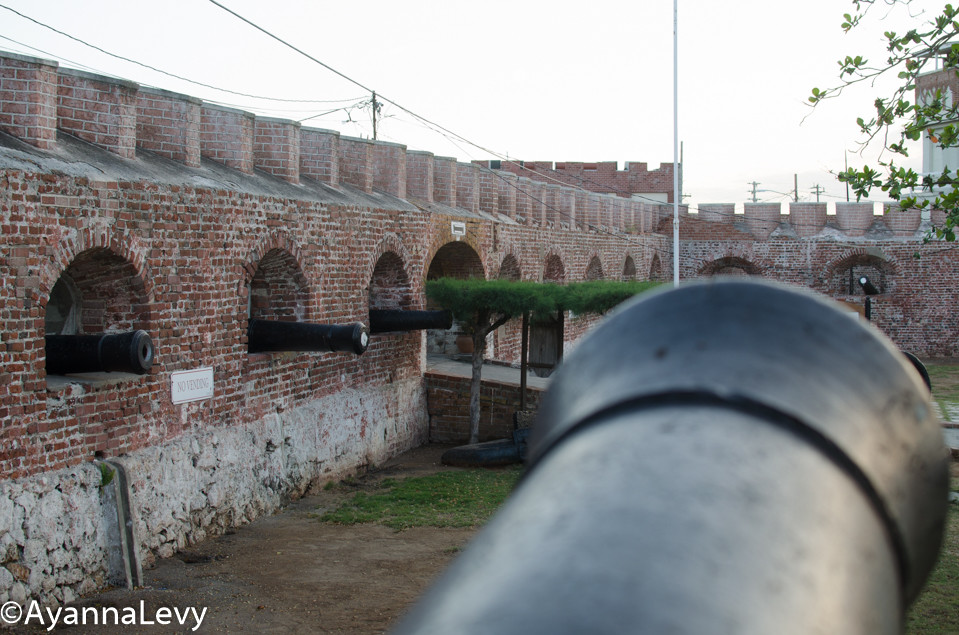
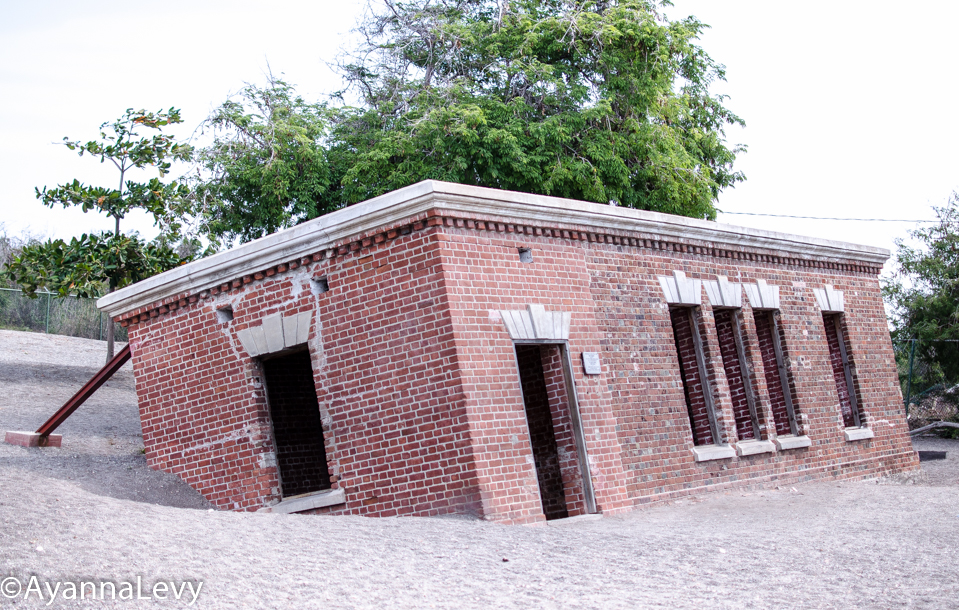
About 6 weeks ago we first went to Fort Charles in Port Royal to take some pics for this article, but instead of taking a whole lot of pictures, we only got one because the Fort was closed. We went back again last week Saturday to try and get some more. Did you know that I did a tour and l learnt a lot about Fort Charles? Yes, three of the things I learnt are that there were two earthquakes not just one, that 5,000 people died in the first one, and that it was in the second one that the giddy house sank.
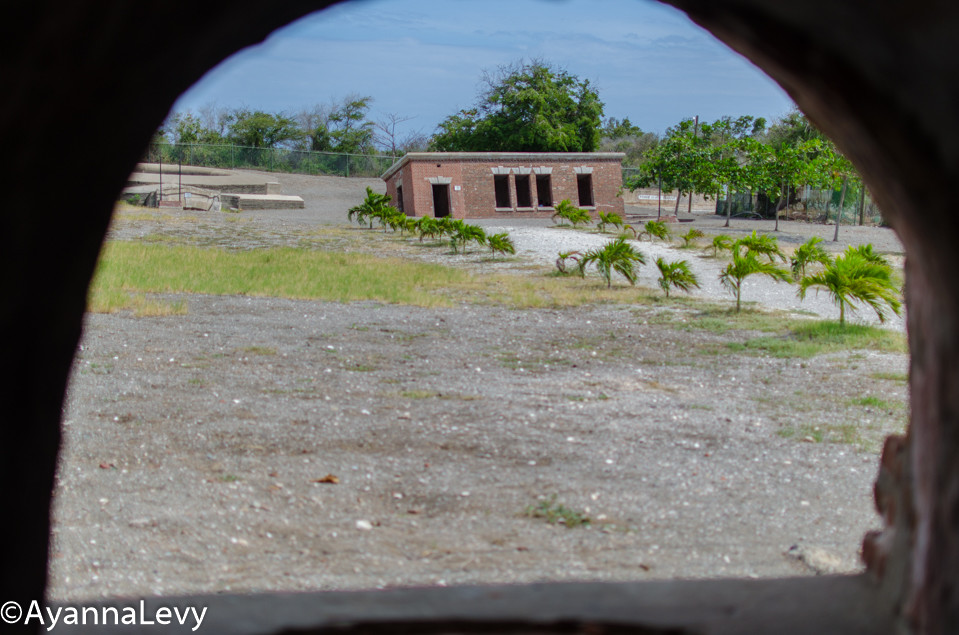
On the way from the fort to the giddy house I met a guy from Brazil who also went to tour and take pictures. From afar the giddy looked exciting and I was hoping that I would go in really soon but my dad said maybe we could take a close up first, which I did. After taking the shot I went inside the giddy house, but when I got inside I found out why they call it the giddy house, I felt like I was going to fall on my face.
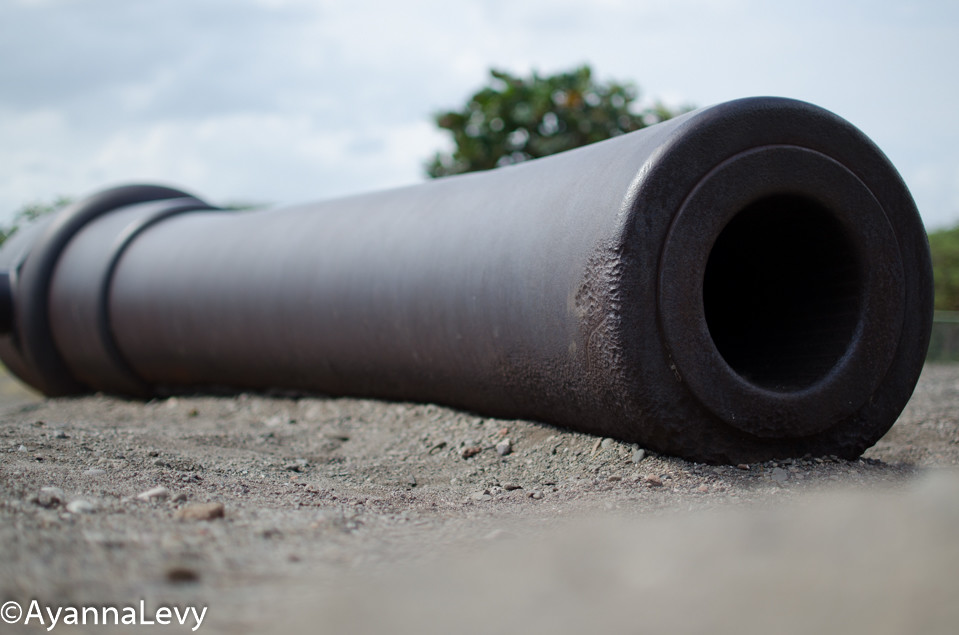
There was also a part of really big cannon that was in the sand next to the giddy house, they used it to defend the fort against enemy ships.
So that`s it from Fort Charles in Port Royal, bye bye.
About Port Royal
Port Royal was once called “the richest and wickedest city in the world”. When only a sand spit, it was first used by the Tainos as a fishing camp. When the Spaniards arrived in Jamaica, they used the spit for cleaning, refitting and caulking of their sailing vessels.
When the British invaded Jamaica in 1655, immediately realising its strategic importance, they started to put fortifications in place.
During the 17th century, it was the virtual capital of Jamaica, and also a headquarters for buccaneers and pirates who brought in much of the treasure they looted on the Spanish Main. Chief among the buccaneers was Henry Morgan who sacked Camaguey, Port Bello, Maracaibo and Panama. Morgan was later knighted and made Lieutenant Governor of Jamaica. He died at Port Royal in 1688.
By 1692 Port Royal had become an important economic centre, but on June 7, of that year, it was destroyed by an earthquake. A large portion of the town sank into the sea, while about two fifth of the population-died either in the earthquake or in the plagues and pestilences that followed.
Almost immediately the houses and fortifications were rebuilt on what by then was an island separated from the rest of the Palisades, but in 1703 a fire destroyed the entire town which had been rebuilt mainly of wood. Hurricanes in 1712, 1722 and 1726 ensured that Port Royal would never again rise to its former glory, as all the merchants shifted across the harbour to settle in Kingston, a less healthy, but safer site than Port Royal. However, Port Royal did not decline entirely, as in the 18th century, it enjoyed renewed fame as a British Naval Station. Among those associated with it were the illustrious Horatio Nelson and the hard-fighting admirals Benbo w, Vernon and Rodney.
After the Napoleonic wars Port Royal declined in importance. The Naval Dockyard was closed in 1905 and moved to Canada; the 1907 earth¬quake damaged the town while the garrison left in the 1950s. Hurricane Charlie of 1951 swept over Port Royal leaving only a few buildings of its historic past.
Today with the warships and the soldiers gone, Port Royal has become a quiet fishing village, but it is one of the most important historical and archaeological sites in Jamaica-let it never be forgotten that for over 200 years, Port Royal was England’s biggest naval base in the Caribbean, so strong and powerful, that no enemy dared attack it.
— http://www.jnht.com/site_port_royal.php

I see a star rising wish we could produce more of you.
keep up the good work little one
This is very interesting stuff. I cant remember if I was told about the 2nd earthquake in Port Royal. I am gad you enjoyed taking these pictures and learned a bit of Jamaican history as well.
Good job sweetie.
This is really good research and it’s good to get it from direct experience. I enjoyed your photographic presentation.